


Tuck Muntarbhorn
“Light is the wound that does not hurt – it opens you, and in its absence, you find what remains as a memory.” – Tuck Muntarbhorn
Tuck Muntarbhorn (b. 1994, Bangkok, Thailand) makes work that could not have been made by anyone else. Across photography, painting, textile, performance and architecture, their practice traces a single inheritance to its furthest conclusion: what does it mean to come from a family that has spent generations opening surfaces – cloth, body, light – to find what lies beneath and to leave behind the evidence of having looked.
On their maternal side, Muntarbhorn descends from Busardi and Yoswadee, Thailand’s oldest fashion house, founded by their grandmother Yoswadee, who dressed the current Thai King’s Grandmother. On the paternal side, their grandfather was Thailand’s first open-heart surgeon. One lineage clothed the body; the other opened it. Both inheritances converge in a single action – stitching, whether of cloth or of flesh – and in a question that runs through every work Muntarbhorn makes: what remains, once a surface has been penetrated and the moment that required it has passed.
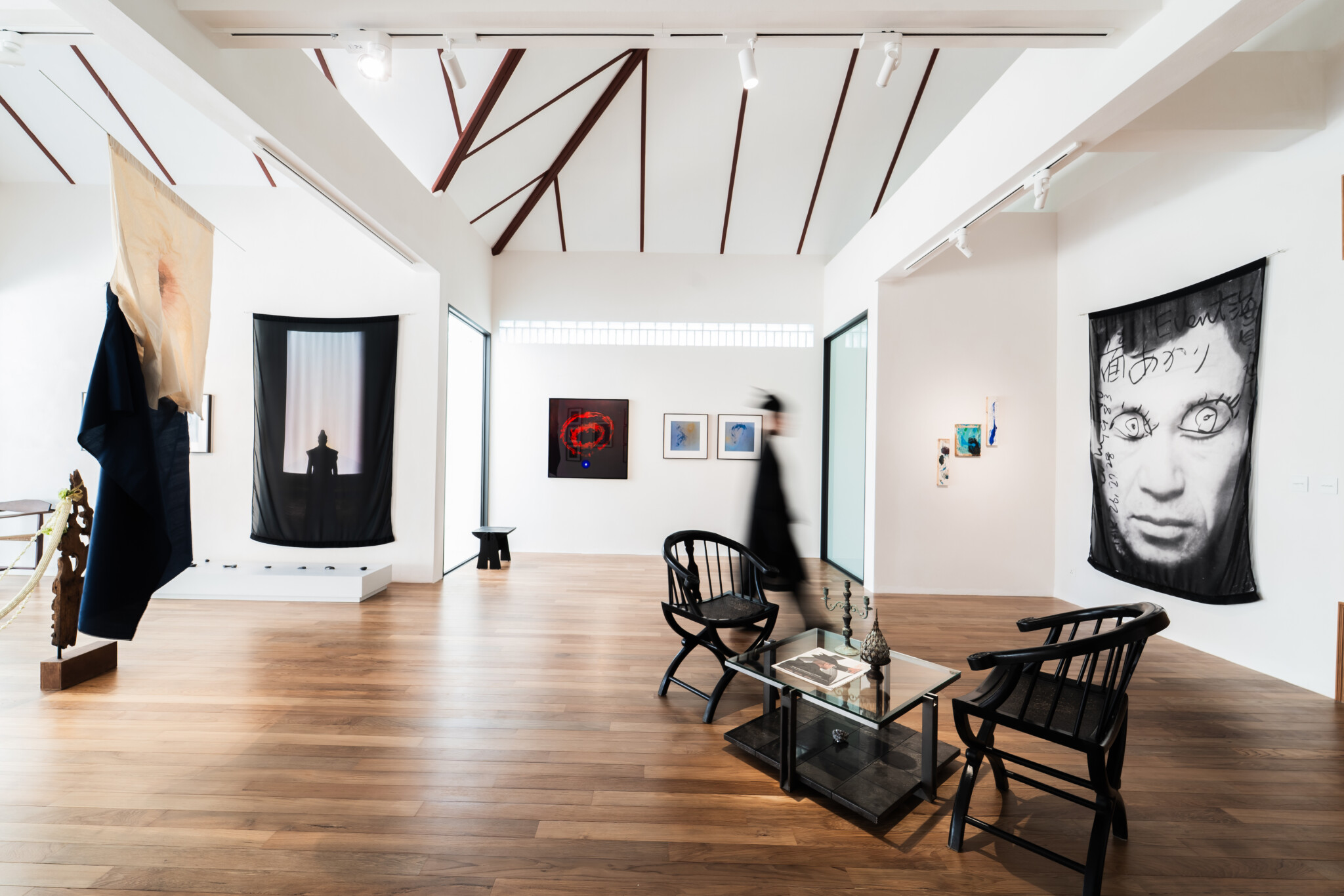
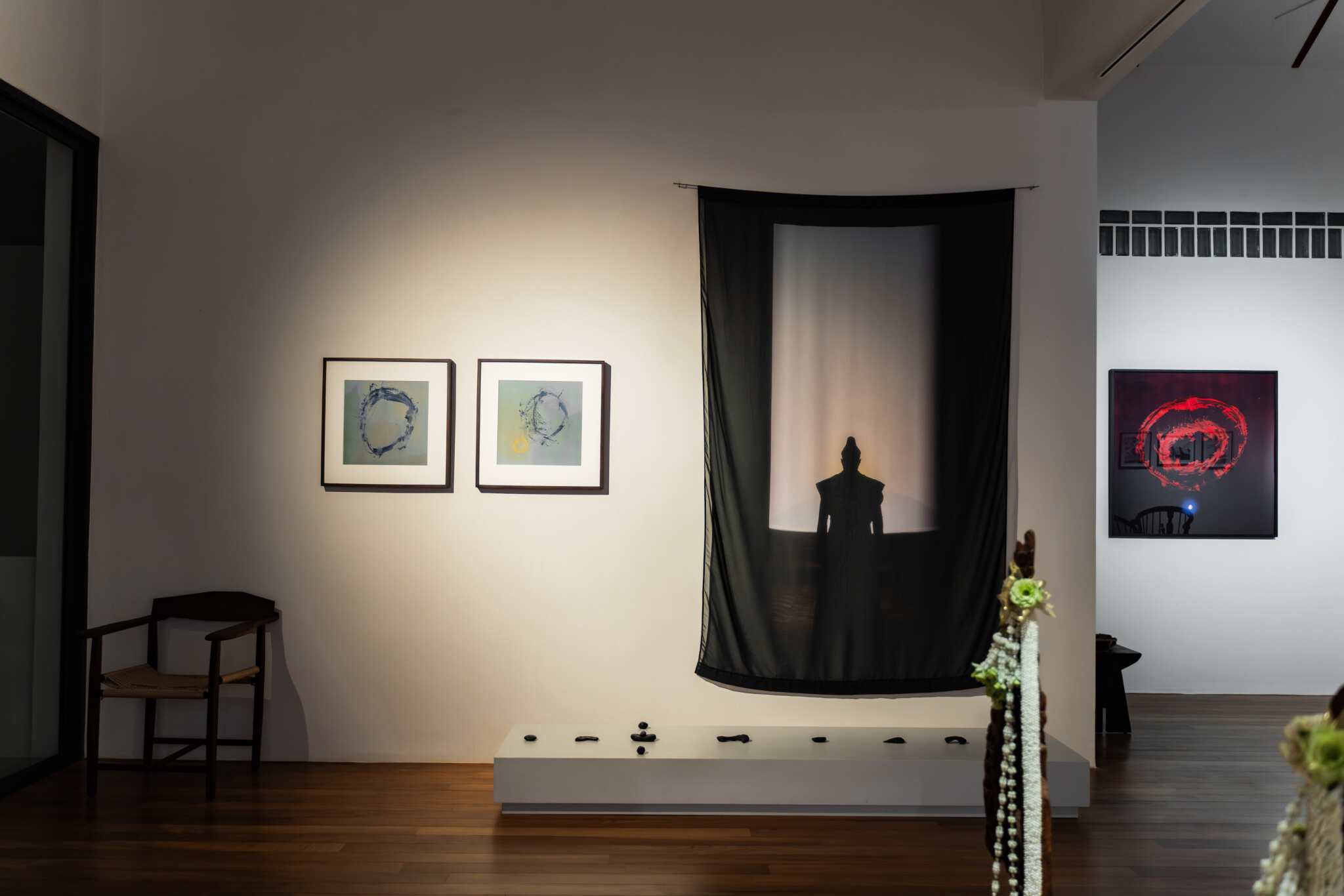
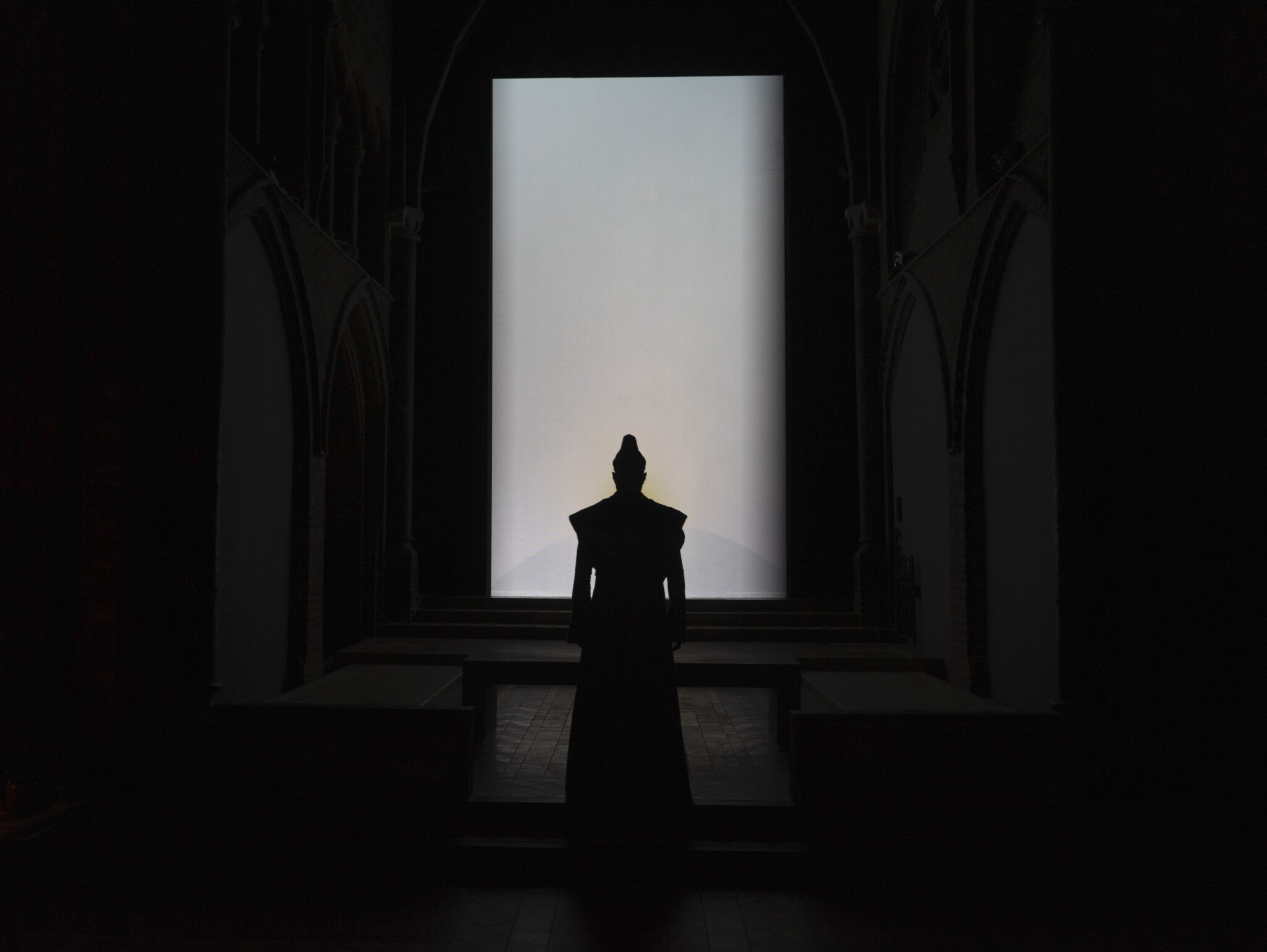
This question finds its clearest form in the silhouette, the recurring structure of Muntarbhorn’s practice across every medium. Not a portrait, and not a representation of the body, the silhouette is evidence – the trace left behind once light has finished its work on a presence that has since withdrawn. Many works originate in pilgrimages to sites the artist considers sacred: Thai temples, the Egyptian pyramids, the Dome of the Rock. Using long-exposure film, Muntarbhorn records what they describe as a “burning memory” – light accumulated through time and fixed onto a photographic surface. These images are often incised and reworked with oil paint, opened with the precision of a surgeon and the patience of a conservator.
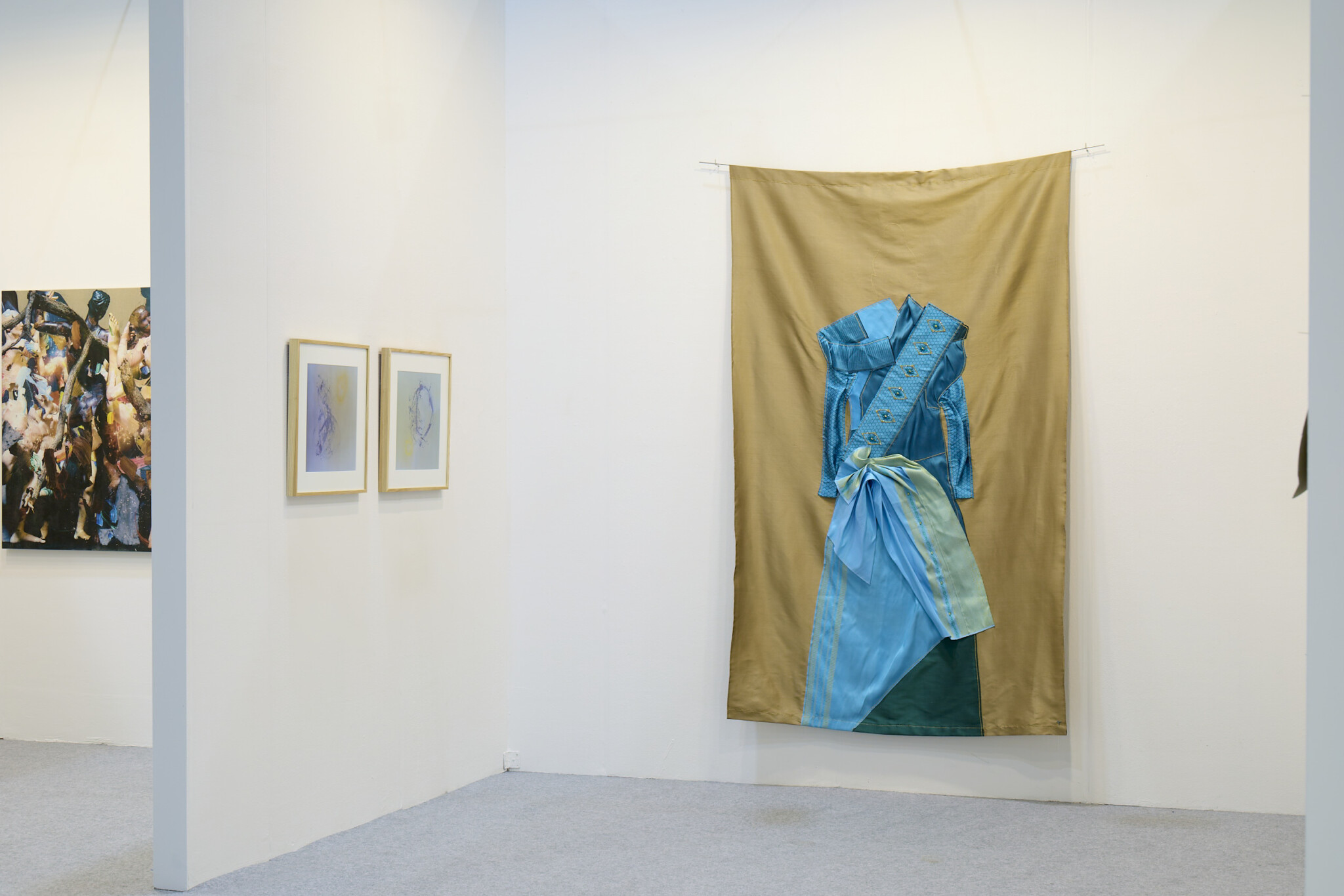
The same logic governs Muntarbhorn’s textile works, built from fabric drawn directly from the Busardi and Yoswadee family archive. The artist composes each piece; the stitching and fabrication are carried out by artisans trained in techniques that pass, in this family, from one generation to the next. The result is a body of work in which inheritance is not a subject the artist depicts, but a material the artist works with directly – cloth that has dressed a court, now opened and recomposed into something new.
Since 2021, Muntarbhorn has extended this inquiry into permanent architectural environments, including Tuck Chapel in the United Kingdom and Tuck Bangkok in Thailand. Conceived as spaces for contemplation, both sites position light, silhouette and silence as primary materials – environments built not to display the work, but to enact its central question at full scale. They ask, as every work in the practice asks: what remains, once form, presence, and the self that made it have all withdrawn and returned to where they came from.
For Muntarbhorn, the answer is neither image nor object. It is afterimage – the lingering presence of something that has already gone, carried forward by a hand that has known, for two generations before this one, exactly how to open a surface, and exactly what to do with the burning memory it leaves behind.